I-Doser V5 When I-Doser v4 was released in 2007 it revolutionized the way people experienced alternate realities. Now, after 5 years of development, we have released V5 for windows-based computers. A completely revamped and free application, I-Doser can help. I-Doser Free is a third party application that provides additional functionality to OS X system and enjoys a popularity among Mac users. However, instead of installing it by dragging its icon to the Application folder, uninstalling I-Doser Free may need you to do more than a simple drag-and-drop to the Trash. Apple Mac Computers and Laptops. Click DOWNLOADand OPENthe IDoserFreeMac.zip DOWNLOAD 2. Double-Click the I-Doser Free package install file inside the.zip A. You may have to move package out of.zip before running. Double-Click the I-Doser Free icon on your desktop or dock after install.
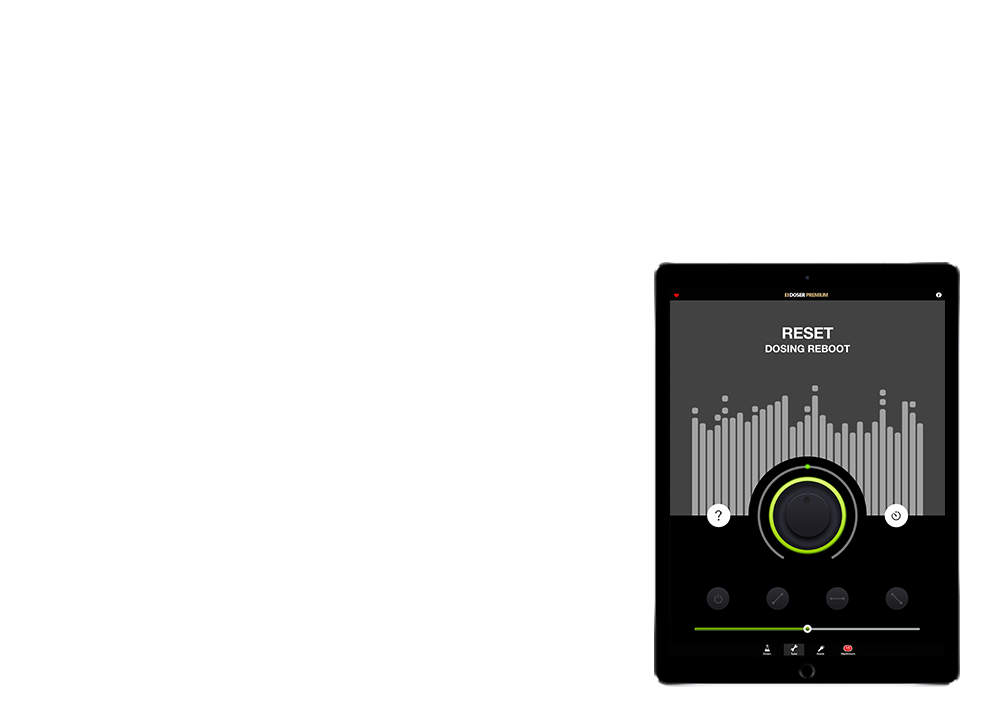
Apple Mac Computers and Laptops. Click DOWNLOADand OPENthe IDoserFreeMac.zip DOWNLOAD 2. Double-Click the I-Doser Free package install file inside the.zip A. You may have to move package out of.zip before running. This is the direct-delivery instant download of I-Doser Premium for Mac that includes features not found in the free. version of the product. Includes hyper-skins to make your player look HOT, advanced visualizaions to enhance your results, MP3 export for exporting your doses to mp3 format or adding background music or sounds.
macOS Big Sur elevates the most advanced desktop operating system in the world to a new level of power and beauty. Experience Mac to the fullest with a refined new design. Enjoy the biggest Safari update ever. Discover new features for Maps and Messages. Get even more transparency around your privacy.
Chances are, your Mac can run macOS Big Sur
The following models are supported:
- MacBook (2015 or later)
- MacBook Air (2013 or later)
- MacBook Pro (Late 2013 or later)
- Mac mini (2014 or later)
- iMac (2014 or later)
- iMac Pro (2017 or later)
- Mac Pro (2013 or later)
To see which model you have, click the Apple icon in your menu bar and choose About This Mac.
Make sure you’re ready to upgrade.
Before you upgrade, we recommend that you back up your Mac. If your Mac is running OS X Mavericks 10.9 or later, you can upgrade directly to macOS Big Sur. You’ll need the following:
- OS X 10.9 or later
- 4GB of memory
- 35.5GB available storage on macOS Sierra or later*
- Some features require an Apple ID; terms apply.
- Some features require a compatible internet service provider; fees may apply.
Upgrading is free and easy
Upgrading from macOS Catalina 10.15 or Mojave 10.14?
Go to Software Update in System Preferences to find macOS Big Sur. Click Upgrade Now and follow the onscreen instructions.
Upgrading from an older version of macOS?
If you’re running any release from macOS 10.13 to 10.9, you can upgrade to macOS Big Sur from the App Store. If you’re running Mountain Lion 10.8, you will need to upgrade to El Capitan 10.11 first.
If you don’t have broadband access, you can upgrade your Mac at any Apple Store.
- OS X 10.9 or later
- 4GB of memory
- 35.5GB available storage on macOS Sierra or later*
- Some features require an Apple ID; terms apply.
- Some features require a compatible internet service provider; fees may apply.
For details about your Mac model, click the Apple icon at the top left of your screen and choose About This Mac. These Mac models are compatible with macOS Big Sur:
- MacBook (2015 or later)
- MacBook Air (2013 or later)
- MacBook Pro (Late 2013 or later)
- Mac mini (2014 or later)
- iMac (2014 or later)
- iMac Pro (2017 or later)
- Mac Pro (2013 or later)
Siri
Requires a broadband internet connection and microphone (built-in or external).
Hey Siri
Supported by the following Mac models:
- MacBook Pro (2018 or later)
- MacBook Air (2018 or later)
- iMac Pro (2017 or later)
Dictation, Voice Control, and Voice Memos
Requires a microphone (built-in or external).
Spotlight Suggestions
Requires a broadband internet connection.
Gestures
Requires a Multi-Touch trackpad, Force Touch trackpad, Magic Trackpad, or Magic Mouse.
Force Touch gestures require a Force Touch trackpad.
VoiceOver gestures require a Multi-Touch trackpad, Force Touch trackpad, or Magic Trackpad. Devi mahatmyam full tamil with meaning pdf.
Photo Booth

Requires a FaceTime or iSight camera (built-in or external) or USB video class (UVC) camera.
FaceTime
Audio calls require a microphone (built-in or external) and broadband internet connection.
Video calls require a built-in FaceTime camera, an iSight camera (built-in or external), or a USB video class (UVC) camera; and broadband internet connection.
Apple TV
High dynamic range (HDR) video playback is supported by the following Mac models:
- MacBook Pro (2018 or later)
- iMac Pro (2017 or later)
- Mac Pro (2019) with Pro Display XDR
Dolby Atmos soundtrack playback is supported by the following Mac models:
Views Formate Added On Category; 1,692.MP3: 2018-04-25: Hindi Song Ringtone Ringtones: sare jahan se achha written by muhammad iqbal, sare jahan se achha hindustan hamara guitar ringtone, sare jahan se acha instrumental ringtone piano, sare jahan se acha hindustan hamara instrumental ringtone, sare jahan se acha guitar ringtone. Ringtonedownload.in currently offers free download of Sare Jahan Se Acha (195.96 KB) – the best Bollywood track of all times. Sare jahan se acha hindustan hamara mp3 ringtone free download ek bar to radha ban kar. Download Sare Jahan Se Achha Hindustan Hamara - Instrumental free ringtone to your mobile phone in mp3 (Android) or m4r (iPhone). #sare jahan se achha hindustan hamara #instrumental #patriotic #desh bhakti #flute. Download Sare jahan se achha hai. Bansuri free ringtone to your mobile phone in mp3 (Android) or m4r (iPhone). #sare jahan se achha hai. Bansuri #bansuri #background music #hit #desh bhakti. Download Sare Jahan Se Achha Hindustan Hamara with Guitar free ringtone to your mobile phone in mp3 (Android) or m4r (iPhone). #desh bhakti #instrumental #patriotic #india #independence day #republic day #rock.
- MacBook Air (2018 or later)
- MacBook Pro (2018 or later)
Sidecar
Supported by the following Mac models:
- MacBook (2016 or later)
- MacBook Air (2018 or later)
- MacBook Pro (2016 or later)
- Mac mini (2018 or later)
- iMac (late 2015 or later)
- iMac Pro (2017 or later)
- Mac Pro (2019)
Supported by all iPad models with Apple Pencil support:
- 12.9-inch iPad Pro
- 11-inch iPad Pro
- 10.5-inch iPad Pro
- 9.7-inch iPad Pro
- iPad (6th generation or later)
- iPad mini (5th generation)
- iPad Air (3rd and 4th generation)
Continuity Camera
Requires an iPhone or iPad that supports iOS 12 or later.
Continuity Sketch and Continuity Markup
Requires an iPhone with iOS 13 or later or an iPad with iPadOS 13 or later.
Handoff
Requires an iPhone or iPad with a Lightning connector or with USB-C and iOS 8 or later.
How To Install Idoser For Mac Computers
Instant Hotspot
Requires an iPhone or iPad with cellular connectivity, a Lightning connector or USB-C, and iOS 8.1 or later. Requires Personal Hotspot service through your carrier.
Universal Clipboard
Requires an iPhone or iPad with a Lightning connector or with USB-C and iOS 10 or later.
Auto Unlock
Requires an Apple Watch with watchOS 3 or later or an iPhone 5 or later.
Approve with Apple Watch
Requires an Apple Watch with watchOS 6 or later or an iPhone 6s or later with iOS 13 or later.
Apple Pay on the Web
Requires a MacBook Pro or MacBook Air with Touch ID, an iPhone 6 or later with iOS 10 or later, or an Apple Watch with watchOS 3 or later.
Phone Calling
Requires an iPhone with iOS 8 or later and an activated carrier plan.
SMS
Requires an iPhone with iOS 8.1 or later and an activated carrier plan.
Home
Requires an iPhone with iOS 12 or later and a configured Home app.
AirDrop
AirDrop to iOS and iPadOS devices requires an iPhone or iPad with a Lightning connector or with USB-C and iOS 7 or later.
AirPlay
AirPlay Mirroring requires an Apple TV (2nd generation or later).
AirPlay for web video requires an Apple TV (2nd generation or later).
Peer-to-peer AirPlay requires a Mac (2012 or later) and an Apple TV (3rd generation rev A, model A1469 or later) with Apple TV software 7.0 or later.
Time Machine
Requires an external storage device (sold separately).
Maps electric vehicle routing
Requires an iPhone with iOS 14 and a compatible electric vehicle.
Maps license plate restrictions
Requires an iPhone running iOS 14 or an iPad running iPadOS 14.
Boot Camp
Allows Boot Camp installations of Windows 10 on supported Mac models.
Exchange Support
Requires Microsoft Office 365, Exchange 2016, Exchange 2013, or Exchange Server 2010. Installing the latest Service Packs is recommended.
Windows Migration

Supports OS X 10.7 or later and Windows 7 or later.
App Store
Available only to persons age 13 or older in the U.S. and many other countries and regions.
Photos
The improved Retouch tool is supported on the following Mac models:
- MacBook Pro (15-inch and 16-inch models) introduced in 2016 or later
- iMac (Retina 5K models) introduced in 2014 or later
- iMac (Retina 4K models) introduced in 2017 or later
- iMac Pro (2017 or later)
- Mac Pro introduced in 2013 or later
- Apple Books
- Apple News
- App Store
- Automator
- Calculator
- Calendar
- Chess
- Contacts
- Dictionary
- DVD Player
- FaceTime
- Find My
- Font Book
- Home
- Image Capture
- Launchpad
- Maps
- Messages
- Mission Control
- Music
- Notes
- Photo Booth
- Photos
- Podcasts
- Preview
- QuickTime Player
- Reminders
- Safari
- Siri
- Stickies
- Stocks
- System Preferences
- TextEdit
- Time Machine
- TV
- Voice Memos
- Activity Monitor
- AirPort Utility
- Audio MIDI Setup
- Bluetooth File Exchange
- Boot Camp Assistant
- ColorSync Utility
- Console
- Digital Color Meter
- Disk Utility
How To Install Idoser For Mac Pro
- Grapher
- Keychain Access
- Migration Assistant
- Screenshot
- Screen Time
- Script Editor
- Sidecar
- System Information
- Terminal
- VoiceOver Utility
- Arabic
- Catalan
- Croatian
- Simplified Chinese
- Traditional Chinese
- Traditional Chinese (Hong Kong)
- Czech
- Danish
- Dutch
- English (Australia)
- English (UK)
- English (U.S.)
- Finnish
- French
- French (Canada)
- German
- Greek
- Hebrew
- Hindi
- Hungarian
- Indonesian
- Italian
- Japanese
- Korean
- Malay
- Norwegian
- Polish
- Brazilian Portuguese
- Portuguese
- Romanian
- Russian
- Slovak
- Spanish
- Spanish (Latin America)
- Swedish
- Thai
- Turkish
- Ukrainian
- Vietnamese
If OS X Yosemite came preinstalled on your new Mac, you’ll probably never need this article. In this article, you discover all you need to know to install or reinstall OS X, if you should have to.
If you’re thinking about reinstalling because something has gone wrong with your Mac, know that an OS X reinstallation should be your last resort. If nothing else fixes your Mac, reinstalling OS X could well be your final option before invasive surgery (that is, trundling your Mac to a repair shop).
You don’t want to reinstall OS X if something easier can correct the problem. So if you have to do a reinstallation, realize that this is more or less your last hope (this side of the dreaded screwdriver, anyway).
Reinstalling is a hassle because although you won’t lose the contents of your Home folder, applications you’ve installed, or the stuff in your Documents folder (unless something goes horribly wrong or you have to reformat your hard drive), you might lose the settings for some System Preferences, which means you’ll have to manually reconfigure those panes after you reinstall. And you might have to reinstall drivers for third-party hardware such as mice, keyboards, printers, tablets, and the like. Finally, you might have to reregister or reinstall some of your software.
How To Install Idoser For Mac High Sierra
It’s not the end of the world, but it’s almost always inconvenient. That said, reinstalling OS X almost always corrects all but the most horrifying and malignant of problems. The process in Yosemite is (compared with root-canal work, income taxes, or previous versions of OS X) relatively painless.
How to install (or reinstall) OS X
In theory, you should have to install Yosemite only once, or never if your Mac came with Yosemite preinstalled. And in a perfect world, that would be the case. But you might find occasion to install, reinstall, or use it to upgrade, such as
If your Mac is currently running any version of OS X except Yosemite
If you have a catastrophic hard-drive crash that requires you to initialize (format) or replace your boot drive
If you buy an external hard drive and want it to be capable of being your Mac’s startup disk (that is, a bootable disk)
If you replace your internal hard drive with a larger, faster, or solid state drive
If any essential OS X files become damaged or corrupted or are deleted or renamed
How To Install Idoser For Mac Pro
The following instructions do triple duty: Of course they’re what you do to install OS X for the first time on a Mac or a freshly formatted hard or solid-state disk. But they’re also what you do if something really bad happens to the copy of OS X that you boot your Mac from, or if the version of OS X on your Mac is earlier than 10.10 Yosemite. In other words, these instructions describe the process for installing, reinstalling, or upgrading OS X Yosemite.
If you’ve never had Yosemite on this Mac, the first thing to do is visit the Mac App Store, download Yosemite, and install it. Once you’ve done that, here’s how to install, reinstall, or upgrade Yosemite, step by step:
Boot from your Recovery HD partition by restarting your Mac while holding down the Command+R keys.
The OS X Utilities window appears. Select Reinstall OS X, and click Continue. The OS X Yosemite splash screen appears. Click Continue.
A sheet appears informing you that your computer’s eligibility needs to be verified by Apple. Click Continue to begin the process of installing or reinstalling OS X.
If you’re not connected to the Internet, you’ll be asked to choose a Wi-Fi network from the AirPort menu in the top-right corner.
The Yosemite software license agreement screen appears. Read it and click Agree.
A sheet drops down, asking whether you agree to the terms of the license agreement. Yes, you did just click Agree; this time you’re being asked to confirm that you indeed clicked the Agree button.
If you don’t click Agree, you can’t go any farther.
Choose the disk on which you want to reinstall OS X by clicking its icon once in the pane where you select a disk.
If only one suitable disk is available, you won’t have to choose; it will be selected for you automatically.
Click the Install button.
A sheet asks for your Apple ID and password. Type them in the appropriate fields; click Sign In, and your Yosemite installation (or reinstallation) begins.
The operating system takes 30 to 60 minutes to install, so now might be a good time to take a coffee break. When the install is finished, your Mac restarts itself.
If you were reinstalling Yosemite on the hard disk that it was originally installed on, or upgrading from Mavericks, you’re done now. Your Mac will reboot, and in a few moments you can begin using your new, freshly installed (and ideally trouble-free) copy of OS X Yosemite.
If, on the other hand, you’re installing Yosemite on a hard disk for the first time, you still have one last step to complete. After your Mac reboots, the Setup Assistant window appears. You need to work your way through the Setup Assistant’s screens as described below.
Getting set up with the Setup Assistant
Assuming that your installation process goes well and your Mac restarts itself, the next thing you should see (and hear) is a short, colorful movie that ends by transforming into the first Setup Assistant screen (Apple Assistants such as this are like wizards in Windows, only smarter), fetchingly named Welcome.
To tiptoe through the Setup Assistant, follow these steps:
How To Install Idoser For Macbook Air
When the Welcome screen appears, choose your country from the list by clicking it once, and then click the Continue button.
If your country doesn’t appear in the list, select the Show All check box, which causes a bunch of additional countries to appear.
After you click Continue, the Select Your Keyboard screen appears.
Choose a keyboard layout from the list by clicking it once; then click Continue.
If you want to use a U.S. keyboard setup, click the U.S. listing. If you prefer a different country’s keyboard layout, select the Show All check box, and a bunch of additional countries’ keyboards (as well as a pair of Dvorak keyboard layouts) appear in the list. Choose the one you prefer by clicking it — and then click Continue.
The Select Your Wi-Fi Network screen appears.
Click the name of the wireless network you use to connect to the Internet, type in its password, and then click Continue.
If you don’t see the network you want to use, click Rescan. If you don’t use a wireless network, click Other Network Setup, and then choose one of the available options, or choose My Computer Does Not Connect to the Internet. Click Continue.
The Migration Assistant (also known as the Transfer Information to This Mac) screen appears.
Choose to transfer data, then click Continue, or choose not to transfer data, then click Continue.
If this is a brand-new Mac or you’re installing OS X Yosemite on a Mac and have another Mac or Time Machine backup disk nearby, you can transfer all of your important files and settings by following the onscreen instructions and connecting the new and old Macs via FireWire or Ethernet cable.
Transferring data can take hours — that’s the bad news.
The good news is that once the data transfer finishes, you’re finished, too. In other words, you can ignore the steps that follow (which are only for brand new installations with no data to transfer).
Goodbye and good luck.
Assuming you chose not to transfer data, the Sign In With Your Apple ID screen appears.
If you want to use your Apple ID with this Mac, type it (such as tcook@me.com) and your password in the appropriate fields, and then click Continue. Or, if you don’t have an Apple ID or prefer not to use one with this Mac, click Don’t Sign In, and then click Continue.
To learn more about getting an Apple ID, click the blue “Learn More” link. In a nutshell, it lets you make one-click purchases at the iTunes Store, iPhoto, or the Apple Store, and includes free iCloud membership.
The Allow iCloud to Use the Location of This Mac for Find My Mac sheet appears.
Click Allow or Not Now.
The Terms and Conditions screen appears.
Read the Terms and Conditions and click Agree. A dialog confirms your agreement. Click Agree again.
The Create A Computer Account screen appears.
Fill in the Full Name, Account Name (sometimes called Short Name), Password, Verify Password, and Hint fields, and then click Continue. Or, check the Use my iCloud Account to Log In checkbox. Then fill in the Account Name (sometimes called Short Name), and click Continue.
This first account that you create will automatically have administrator privileges for this Mac. You can’t easily delete or change the name you choose for this account, so think it through before you click Continue.
You can’t click the Continue button until you’ve filled in the first two fields. Because a password is optional, you can choose to leave both password fields blank if you like. If you do, your Mac warns you that without a password, your Mac won’t be secure. If that’s okay, click OK. If you change your mind and want to have a password, click Cancel.
Click on the little picture to the right of your name (it’s labeled “edit”) if you want to choose a different picture or take a picture of yourself with your Mac’s built-in camera.
If you choose to take a picture, click the Take Photo Snapshot button. When the picture appears, you can change its size by using the slider control directly below the image and/or move it around in the frame by clicking your face and dragging. If you’re not happy with this snapshot, click Retake a Video Snapshot. When you’re happy with it, click Continue.
If you choose to select a picture from the Picture library, click the picture you want to represent you — the butterfly, dog, parrot, flower, or whatever — and then click Continue.
The iCloud Keychain screen appears.
Click Set Up iCloud Keychain or Set Up Later.
If you choose Set Up iCloud Keychain, a screen requesting your passcode appears. Type your four digit passcode, and click Continue.
If you’ve forgotten your passcode or don’t have one, click Forgot Code to reset iCloud Keychain.
In either case, a verification code is sent to your iPhone or other Apple device; type it in, and click Continue.
The OS X Finder’s Desktop appears.
And that’s all there is to it. You’re done.